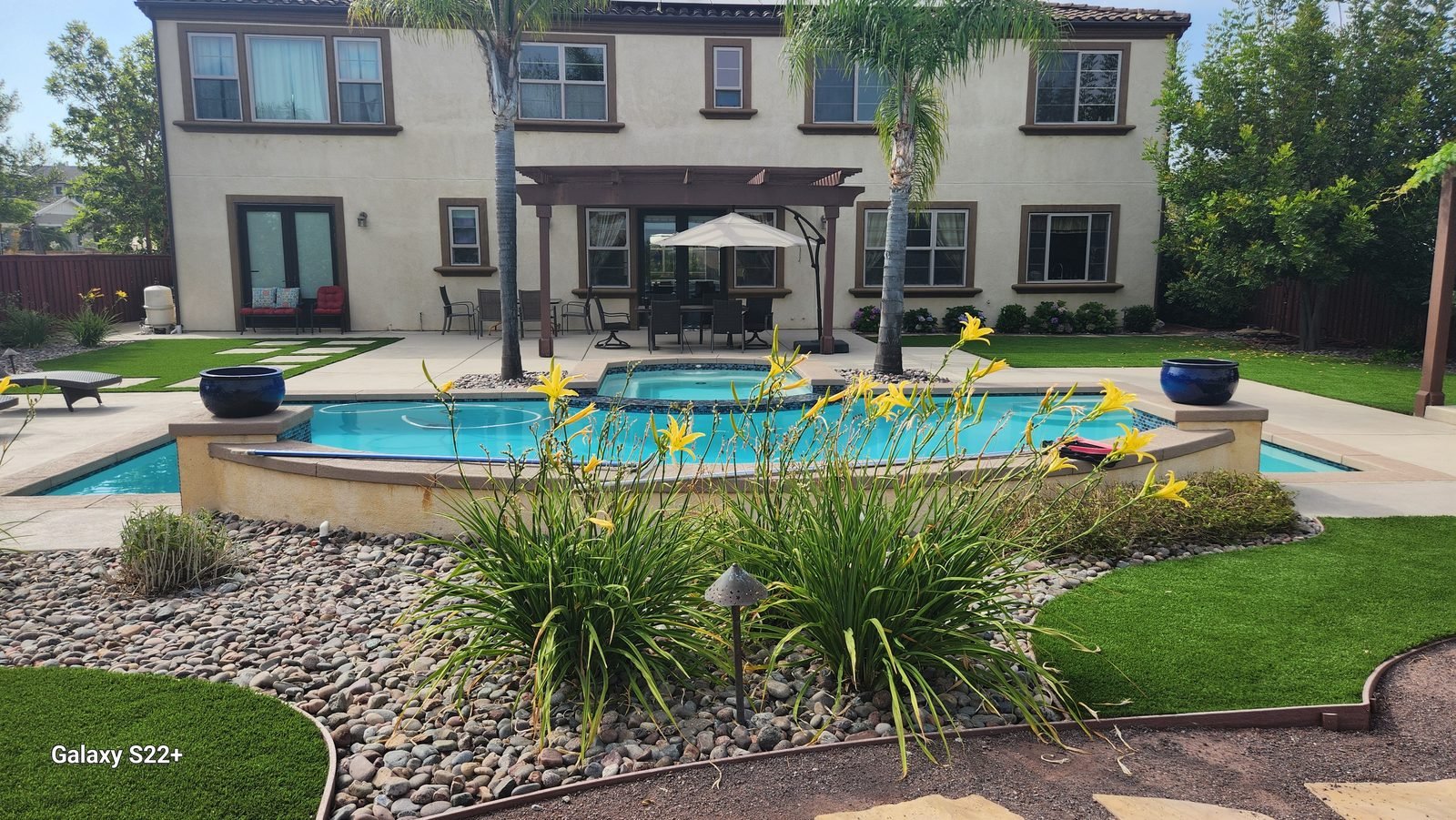
Two pools with the same footprint can cost 200 to 300 percent apart. That swing is not random. It comes from how you use the pool, what you put around it, the materials you pick for the finish and the deck, and the equipment you run. The shell is the small part. The decisions you make about it are the price.
I have been building pools in San Diego County since 1984, under the same name and the same owner. The number one thing I tell people is to spend where it counts and skip where it doesn’t. A homeowner who understands what each choice costs builds a better pool for less money than one who picks a figure off a per-square-foot chart. Here is what a custom pool costs in 2026, and what moves the number.
What a custom pool really runs in 2026
These are real San Diego ranges for a custom shotcrete pool in 2026. Treat them as ballpark. Notice that the footprint barely changes across the three tiers. What changes is the finish, the features, and the equipment you choose.
- $90,000–$110,000 — A smaller custom pool with standard plaster, basic tile, and a simple concrete deck. Clean and durable, no add-ons.
- $110,000–$150,000 — A mid-size pool with a raised spa, a tanning shelf, upgraded tile and pebble finish, and a paver or stone deck.
- $150,000–$180,000+ — A larger pool with water features, glass tile, a heated spa, full automation, and a fully built-out deck and surround.
Same hole in the ground, two and a half times the price. The difference is what you decide to put in it and around it. That is exactly why understanding the choices matters more than chasing a low number.
What drives the cost
People assume size sets the price. Size matters, but it is rarely the biggest lever. The first question is how you will use the pool, because that decides everything you build around it.
How you use it
Lap swimmer, kids splashing, a place to cool off and entertain? Each one points to a different pool. A lap pool wants length over width. A family pool wants a big shallow shelf and a generous deck for chairs and traffic. An entertainer’s pool wants a spa, a fire feature nearby, and room to gather. Get the use right and you stop paying for square footage and features you will never touch.
Layout and the space around it
The pool is one piece of the outdoor space. Where it sits, how people move from the house to the water to the seating, how much deck you need so the space works, that is the design, and it is a real part of the budget. We will take design control here when a layout won’t function, because a pool placed wrong is expensive to love.
Scope of the surround
Decking, a spa, a tanning shelf, water features, lighting, and an outdoor kitchen nearby all stack on top of the shell. This is where two pools the same size separate by tens of thousands. Decide the full scope up front so it is in the price, not bolted on later.
Materials
This is the lever most people underrate. Standard plaster versus a pebble or quartz finish. Basic waterline tile versus glass. A broom-finished concrete deck versus pavers or natural stone. Each step up is a real number, and each one changes how the pool looks and lasts. We walk you through where the upgrade earns its keep and where it doesn’t, so the money lands where you’ll feel it.
Equipment and automation
A heater, a variable-speed pump, salt or chlorine, automation you run from your phone, a cover. These shape both the install number and what the pool costs to run for the next twenty years. The cheap pump is the expensive one once the energy bill shows up.
The same pool can cost $90,000 or $180,000, and the difference is every choice you make about it. My job is to show you what each one buys so you spend where it counts and skip where it doesn’t.
Shotcrete vs. fiberglass: cost and longevity
Two real choices for a custom build in San Diego, and they behave differently over time. This is a material decision worth understanding before you sign anything.
Fiberglass
A pre-molded shell, cheaper up front and faster to install. The catch is you take the shapes and sizes the factory makes, so a fiberglass pool is never truly custom. The gelcoat surface lasts a long time, but the day you order it the shape is fixed forever. If a stock shape fits how you’ll use the space and budget is the deciding factor, it can be a sound choice.
Shotcrete
Sprayed concrete over steel, formed to any shape, depth, and feature you can draw. It costs more and takes longer, and it is the only real option for a true custom pool: a raised spa, a tanning shelf, a vanishing edge, an odd footprint that fits your yard. Built and finished right, a shotcrete shell lasts thirty-plus years with a re-plaster along the way. For a custom build, shotcrete wins most of the time, and it is what most of our clients choose.
How a low bid gets low
Here is the one to watch. A low bid usually wins by leaving things out: the upgraded finish you wanted, the deck big enough to use, the heater, the automation, a real allowance for tile and coping. The number looks great on paper because half the pool you pictured isn’t in it yet.
Then the choices arrive one at a time during the build, each one a change order at a markup, after you have already committed. When you compare two bids and one is $40,000 lower, line them up item by item. The difference is almost always scope and materials the cheaper one quietly left for later. A fixed price you can read line by line is worth more than a low number you can’t.
Common overruns to avoid
Most pool budgets blow up the same handful of ways. None of them are surprises if the scope is nailed down at the start.
- Finish and tile creep. Plaster, pebble, quartz, glass tile: these get chosen late and the upgrade lands as a change order. Pick the finish up front and put it in the price.
- Deck undersized, then expanded. A deck that’s too small to use gets enlarged mid-job. Size it for how you’ll move and gather before the first pour.
- Equipment chosen by price alone. The cheap single-speed pump and the bare-minimum heater cost you every month for twenty years. Decide on running cost, not just the install number.
- Subcontractor handoffs. Every trade you hand off is a markup and a finger to point. We run one team, so there is no margin stacked between the shell, the tile, the equipment, and the deck.
- Features added after the shell. A spa, a tanning shelf, a water feature, automation: easy to want once you see the pool taking shape, expensive to add after the steel is set. Decide them while it’s still on paper.
Why a fixed-price concept beats a per-square-foot number
A per-square-foot price is a guess made before anyone has talked through how you’ll use the pool or what you want it built from. It is useful for one thing: making a phone quote sound cheap. It tells you nothing about scope, finish, or equipment, which is where the real money lives.
We do it the other way. We sit down with how you’ll use the space, lay out the design, choose the materials and equipment together, and price the whole job as one fixed-price concept you can read line by line. The number we hand you is the number, because every choice is already in it. After forty-two years of pricing pools in this county, we know what each decision costs. The change-order game is for contractors who’d rather you find out later.
Permits
A pool in San Diego County needs permits: structural, electrical, plumbing, and a required safety barrier or fence. Some lots call for engineered plans on top of that. Permit and engineering costs are real and belong in the budget from day one. We pull them, schedule the inspections, and build to code, because a pool that fails inspection is not finished, and a pool that fails ten years out is on us. We have carried a clean ten-year structural liability since 1984, and we plan to keep it that way.
<!-- Inline FAQ (also wrapped in FAQPage schema in ) -->